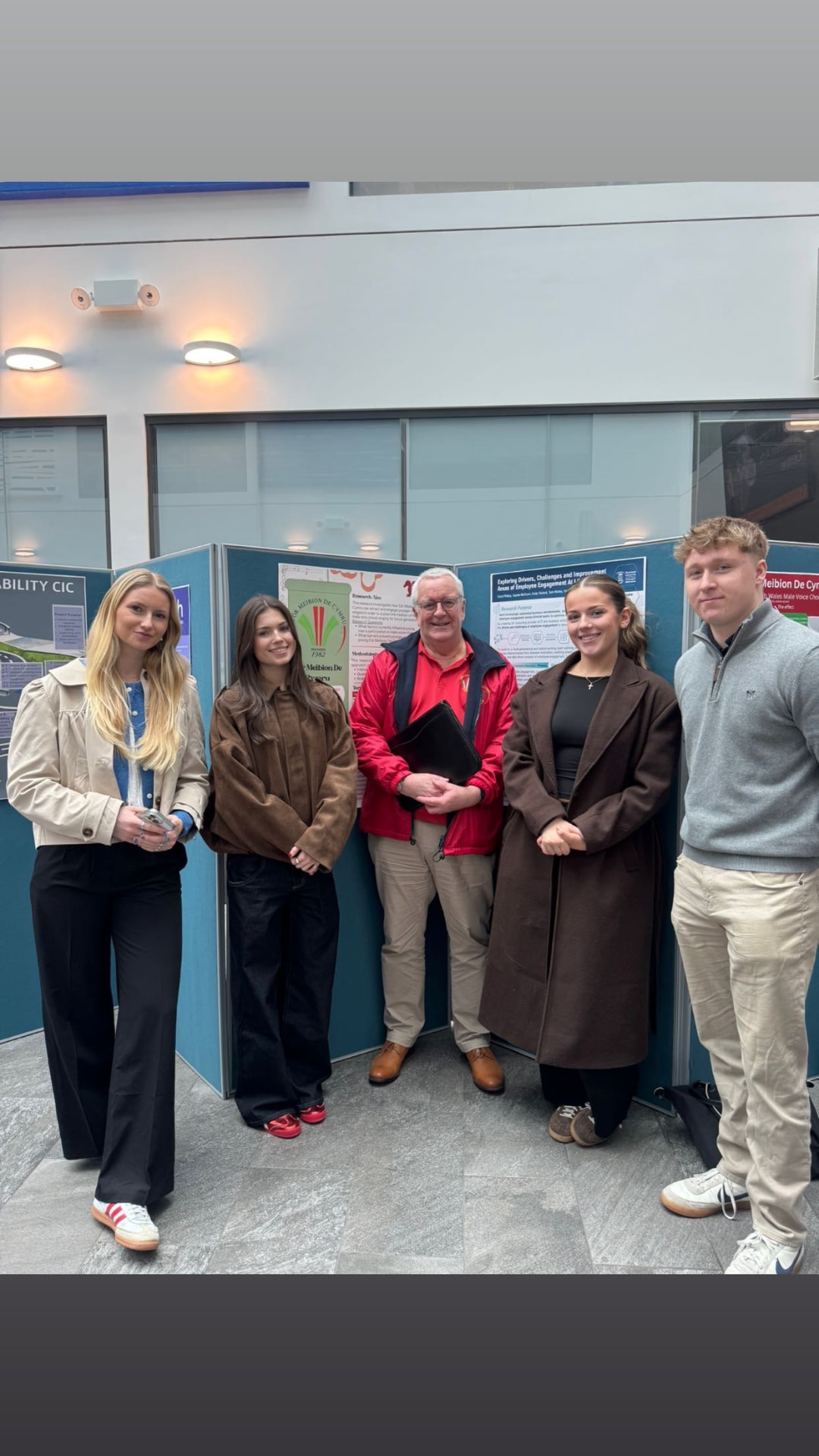
The challenge
Côr Meibion De Cymru is a South Wales men’s choir with a significant cultural history, but its membership had fallen dramatically from more than 500 people to approximately 60.
Many current members were entering their eighties. Without attracting a new generation, the organisation believed it could cease to exist within approximately ten years.
The initial challenge appeared straightforward:
How can the choir recruit younger members?
However, that question contained several untested assumptions.
Was there genuinely no interest in joining a choir? Were potential members unaware of the opportunity? Did they view choirs as inaccessible or outdated? Was the current communication giving people a reason to participate, or simply telling existing followers about upcoming performances?
The choir was active across several social-media platforms, but its communication was inconsistent and largely reactive. Much of the content delivered information in one direction rather than encouraging conversation, participation or a sense of belonging.
The project therefore needed to address several connected problems:
- A severe decline in membership
- An ageing existing membership
- Outdated perceptions of male choirs
- Inconsistent digital communication
- Limited interaction with social content
- Low discoverability beyond existing followers
- A formal, performance-led image
- Limited perceived accessibility for potential members
- Organisational resistance to changing established practices
- Dependence on volunteers to implement new activity consistently
This was not simply a social-media brief. It was a long-term organisational sustainability problem with marketing at its centre.
The audience
The primary research audience was men aged 40 and above in Wales.
This was an important distinction. “Younger members” did not necessarily mean teenagers or university students. It meant attracting people who could become active members before the organisation’s existing demographic made long-term continuity impossible.
The research explored:
- Existing perceptions of male choirs
- Whether respondents would consider joining
- What might motivate participation
- Which barriers made joining feel less likely
- Whether informal exposure could increase interest
- The importance of social connection and community
The choir’s existing members formed a second critical audience. They controlled much of the organisation’s capacity, culture and willingness to change. New members could not be attracted and retained successfully unless the current membership supported a more accessible and engagement-led approach.
The wider audience also included potential concert attendees and supporters whose engagement could strengthen awareness, revenue and the choir’s cultural relevance.
My contribution
I completed the consultancy project as part of a five-person team during my final year at Swansea University.
The overall project used a mixed-method research approach:
- Quantitative questionnaire data from men aged 40 and above in Wales
- Qualitative insight gathered through email discussions with a choir member
- Review of the choir’s current marketing activity
- Analysis of previous campaign activity and engagement opportunities
My individual focus was analysing the choir’s social-media strategy.
I examined:
- How consistently the choir posted
- Whether its platforms worked together as an integrated system
- How discoverable its content was
- Whether posts encouraged interaction or only delivered information
- How effectively the choir communicated its personality
- Whether the content moved audiences from awareness towards participation
- How its formal, performance-led image affected accessibility
- Where more personal and interactive content could strengthen engagement
I applied marketing and strategic frameworks including:
- STP to examine its audience and positioning
- AIDA to evaluate movement from attention towards action
- Relationship marketing to assess long-term engagement
- Ansoff’s Matrix to consider audience and market development
- McKinsey’s 7S framework to examine internal alignment
- Resource-based thinking to test whether the recommendations were feasible
- Strategic exploration and exploitation to balance innovation with heritage
Rather than using those frameworks as academic decoration, I used them to answer practical questions: who should the choir prioritise, what should change, what could it realistically sustain and what might prevent implementation?
The insight
The research overturned our starting assumption.
We initially believed that declining membership might reflect a broad lack of interest in male choirs. The questionnaire suggested otherwise.
Most respondents were willing to consider joining under the right circumstances, while 60% identified social interaction as their primary motivation.
The issue was not simply a lack of demand.
Interest existed, but the choir was not making that interest easy to act on.
The central insight became:
The choir did not need to manufacture interest. It needed to create a better invitation.
Potential members were more likely to consider joining after informal exposure to the choir. That suggested the formal commitment of “becoming a choir member” felt much larger than attending a relaxed event, trying a rehearsal or coming with somebody they already knew.
Social interaction was not a secondary benefit of membership. It was potentially the strongest recruitment proposition.
This shifted the strategic focus from promoting performances to making participation feel familiar, social and accessible.
The output
The research was translated into seven connected recommendations designed to improve recruitment while protecting the choir’s cultural identity and organisational sustainability.
- Develop an integrated digital strategy
The choir’s fragmented and reactive social activity needed to become a coordinated system. I recommended consistent content planning, clearer audience targeting, cross-platform alignment and selective paid promotion to extend its reach beyond existing followers.
- Replace information delivery with interaction
Current content largely announced performances rather than building relationships. More personal formats—member stories, behind-the-scenes content, questions and direct invitations—would reveal the people behind the choir and encourage audiences to participate rather than passively consume information.
- Introduce low-pressure taster sessions
Taster sessions would reduce the psychological commitment associated with formally joining a choir. Potential members could experience the environment, meet existing members and test their interest before being expected to make a longer-term commitment.
- Create “bring a friend” events
With 60% of respondents identifying social interaction as their main motivation, existing relationships could become a powerful recruitment mechanism. Attending with somebody familiar would reduce uncertainty while turning current members into active advocates for the choir.
- Reposition membership around community
The choir needed to move from a predominantly formal, performance-led identity towards a more accessible community proposition. Communications should emphasise friendship, confidence, Welsh culture and belonging while retaining the musical professionalism and heritage that differentiated the organisation.
- Build a measurable recruitment journey
Recruitment was structured as a progression:
Awareness → Informal exposure → First participation → Return → Membership
This shifted measurement away from followers and impressions alone. More meaningful indicators included taster registrations, attendance, repeat participation, membership enquiries and sustained member retention.
- Design for organisational feasibility
Although the recommendations were relatively low-cost, successful delivery depended on volunteer capacity, internal support and consistent coordination. The strategy therefore needed realistic content expectations, clear ownership and phased implementation. Its impact would ultimately be determined not by the quality of the ideas alone, but by the choir’s ability to embed and sustain them.
The impact
The consultancy produced a research-led explanation of why the choir’s recruitment challenge existed and what it could do next.
Its most important contribution was reframing the problem.
The decline did not appear to be caused entirely by a lot of interest.
The research identified a combination of:
- Outdated perceptions
- Weak positioning
- Inconsistent digital communication
- Limited interaction
- Low perceived accessibility
- An overly formal route into participation
The questionnaire provided evidence that interest remained, while the finding that 60% of respondents prioritised social interaction gave the choir a clearer recruitment proposition.
The recommendations were presented to Côr Meibion De Cymru and provided a strategic basis for:
- Developing a more integrated digital presence
- Testing informal recruitment events
- Making social connection more visible
- Moving beyond passive information delivery
- Converting awareness into participation
- Balancing cultural heritage with future growth
I cannot claim a subsequent rise in membership because implementation results were not available as part of the university project.
The impact I can demonstrate is the quality of the diagnosis: replacing a broad assumption about declining demand with a more specific, evidence supported challenge around awareness, positioning, accessibility and organisational execution.
Learnings
The most valuable learning came from recognising a weakness in my original approach.
My initial instinct was to recommend increasing the choir’s content output. Strategically, that appeared sensible: more consistent and engaging communication could improve visibility.
However, I had not initially considered whether a volunteer-led organisation had the human capacity to sustain that activity.
That changed how I think about strategy.
I learned that:
- The theoretically strongest recommendation may not be the most implementable
- Organisational capacity should be assessed from the beginning
- Volunteer-led organisations require different expectations from commercial marketing teams
- Consistency depends on people, time and internal commitment
- Audience growth requires retention as well as acquisition
- Organisational culture can enable or prevent a marketing strategy
- Quantitative research can identify patterns but may not explain the deeper reasons behind them
- More in-depth qualitative research would have strengthened the behavioural insight
- Strategy must balance ambition, authenticity and execution
- A recommendation is only valuable if the organisation can maintain it
The project moved me from asking:
What would create the greatest marketing improvement?
Towards asking:
What improvement can this organisation realistically deliver consistently?
That is a lesson I now bring to every brief.